Plant Health Care

The most common reason homeowners and business mangers call in a tree or lawn expert is because they are concerned something is wrong with their plants. Tree decline, insects,  power rakedisease attack and the weather often works against us. Sometimes a simple solution is available. For others, a more complex program is needed. Sometimes, when a problem has gone on too long, the plants may be lost.

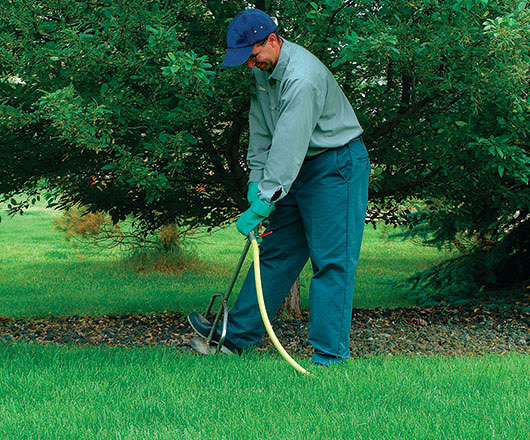
These types of situations led to the development of Plant Health Care programs. Basically, PHC programs are designed to maintain or improve the health of your plants using the most cost-effective and environmentally sensitive practices and treatments available. They operate by monitoring your landscape. This may be as simple as an annual walk-through or as involved as monthly visits. It depends on the complexity and diversity of your landscape. Often monitoring is done in conjunction with your tree care and lawn care programs; while regular preventive and curative applications are being made, other aspects of your property are checked for healthy growth.

When problems beyond the scope of your regular programs arise, your professional will devise solutions and work with you to implement them.

The main point is to work with professionals who are trained and interested in helping keep your property in top condition- people who know how to spot and identify problems or potential problems and how to communicate effectively with you, the owner. Here at Emil Yedowitz Landscaping, we are devoted to finding the best plan for helping you to maintain a healthy landscape.

Professional Landscape Maintenance Just Makes Good Cents!

Maintaining your landscape can become something like cleaning out the garage- you can do just the minimum to get by and get to the rest of it “later.” But unlike your garage, the images-77landscape keeps changing and growing. Weeds keep sprouting, shrubs keep growing and turf and ground covers continue to creep over sidewalks and drives. Before long, your whole landscape can start looking shaggy and overgrown. And once problems get started they almost never disappear on their own and usually get harder to solve.

Get it on the Schedule!

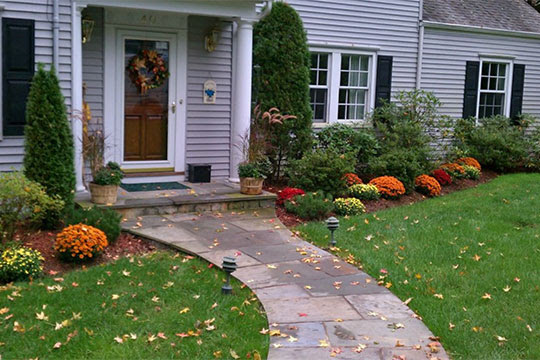
IMG-20110629-00091Regular, professional clean-up, weeding and pruning will make your property and your life a lot happier. This may include a spring clean-up, edging of beds and application of mulch along with any needed pruning. This can be followed by a mid-season weeding and pruning and then in the fall for a final clean-up. Having a big event this season? Arrange now for the services you may need. Most programs are customized to some extent to meet the different challenges of various landscapes. You can make this the year to get landscape in shape by getting it on the schedule!

Decide Early for True Spring Landscaping

Spring is a time when most of us turn our attention to the outdoors. The idea of seeing flowers and shrubs in bloom and trees leafing out gets us all excited. It’s also a great time Unknown-15to arrange for some landscape projects around your property. Installing a new patio or building an outdoor fireplace or just renovating your entry can really make a change to your enjoyment of your outdoor living “room.”

But a problem comes up sometimes, because everyone feels the same way. They want to see and use their new spring project right away. As a result, contractors often get so loaded with projects that they have to start booking jobs to be done as much as several months later.

But there is a Solution!

Decide and act before the rest of the “crowd” does. Get your plan and specifications drawn up before most people are even thinking about it. This gives you several advantages. First you’re getting more time to put into your plan, and secondly, your project will be done before the others even take the first steps! So call today and make your spring and summer a lot more enjoyable in your new landscape!

Brace Yourself (and Your Trees) for Winter Weather

No trees are immune to storm damage, and winter storms can be especially severe. Whether it’s heavy snow or ice storms, the trees on your property have to contend with some pretty rough conditions over the winter season.

If you’re concerned that your valuable trees may be at risk, it’s a good idea to have them evaluated to determine what, if any, preventative measures should be taken. Protective steps may include:

Preventative Pruning: Previously damaged or weak limbs, and branches with too little space between them, can be selectively pruned to minimize the risk of tree failure under heavy snow loads.

Cabling: This reinforces weak limbs and V-shaped forks. Heavy bolts in one or more locations on limbs, with cables running between the limbs, add strength to the tree to help it avoid sudden breakage.

Bracing: This is used to give direct support and reduce twisting strain on a tree. A metal rod is inserted where the trunk splits into two or more limbs, and cables are placed above it.

All too often, the trees most damaged during winter storms are the focal point of a property. If you’ve never considered storm protection for your trees, you may want to think again. It will probably cost more to repair or replace storm-damaged trees than it would to take preventative measures right now.

These Poisonous Plants Mean Business!

Plants really are our friends…for the most part. When it comes to poison ivy, oak and sumac, on the other hand, a better term to use would probably be, “frenemies.”

Each of these plants releases a toxin known as “urushiol,” which causes an itchy, red rash that can last as long as a month. Only a billionth of a gram of urushiol is needed to cause a rash, so it’s best to keep your distance. Whether you’re gardening or taking a hike in the woods this summer, keep and eye out for the following.

Poison Ivy- Perhaps the most well known of the poisonous trio, poison ivy has three pointed leaves with bumpy edges. The middle leaf has a longer stalk than the ones on the sides. Poison ivy grows as a climbing vine.

Poison Oak- Though it also has three leaves, poison oak can be distinguished from poison ivy because its leaves are lobed (in other words, they have deeply indented margins). Poison oak tends to grow as a shrub, but it can also climb like a vine.

Poison Sumac- Poison sumac has sharp, compound leaves (or several leaflets attached to the same stalk). It grows as a shrub or small tree in very wet areas and can reach up to 12’ in height.

Long sleeves, long pants, gloves and enclosed footwear can help to protect you from these plants and their toxins. Of course, that isn’t always practical. If you do think you’ve come in contact, you should rinse thoroughly with cold water to remove any traces of urushiol. This toxin can bond with your skin in as little as 15 minutes, so the sooner you can rinse it off, the better.

Fast Fact: Urushiol can stay active on any surface for up to 5 years!

You “Mite” Have a Problem

Measuring less than 1/50”, spider mites are hard to see with the naked eye. They are usually red, green, orange, brown or black in color, and they have oval-shaped bodies and four pairs of legs.

These pests commonly feed on evergreen foliage, damaging plant cells in the process. Damaged areas have small, light flecks, leading to an overall speckled appearance. In severe infestations, leaf discoloration becomes so extensive that the plant can take an overall gray or bronze look. Leaves and needles may become scorched and drop prematurely. Eventually, plant death can occur.

What Can Be Done?

Spider mites can be controlled with a combination of insecticides and proper care and maintenance (such as regular fertilization and watering) to promote good tree and shrub health. To prevent lasting damage, prompt identification and treatment is essential. If you think you may have a spider mite infestation, a professional inspection is recommended.

Please note: Spider mites can also find their way inside your home through windows and door frames, and may be found on house plants or crawling around windowsills. A perimeter treatment of your lawn and foundation area of your home can help these (and many other insects) outside where they belong.

Hummingbird- Friendly Plants

If you’re interested in attracting hummingbirds to your property without using a feeder, keep in mind that they visit plants with lots of blooms and nectar. Red flowers are helpful, but they aren’t a necessity. You might want to try planting some of the

se around your landscape:

Shrubs:

  • Butterflybush
  • Trumpet vine
  • Summersweet

Perennials:

    •  Bleeding heart
    •  Butterflyweed
    •  Beardtongue
    •  Daylily
    •  Bee balm
    •  Cardinal flower
    •  Coral bells
    •  Delphinium
    •  Foxglove (bi-annual)
    •  Hollyhock (bi-annual)

Annuals:

  •  Impatiens
  •  Nasturtium
  •  Salvia
  •  Spider flower
  •  Snapdragon
  •  Morning glory
  •  Petunia
  •  Flowering tobacco

Hummingbirds are a delight to watch, and common North American species can beat their wings up to 53 times per second!

How to Hire a Contractor

It is hard to believe that February is coming to an end, and that Spring season is just around the corner.  If you are anything like me, I have started to make, and review, my “Spring Project List”.  Some of the projects on the list I may do myself….and some of the projects I may contract out to a professional contractor.

So you may be asking yourself, what do I look for when hiring a professional contractor?

  1. In most states, especially New York State for sure, if a company has any employees (even just 1), they are required to have a workers compensation insurance policy covering each and every employee they employ.  Ask your contractor for a copy of their declaration page.
  2. Liability insurance is a must.  God forbid a job goes bad and/or there is damage to your property as a result of an accident.  A contractors liability insurance policy might help you recover from an accident.  Ask your contractor for a copy of their declaration page.
  3. Contract, Contract, Contract.  In todays fast paced world, why take a chance with mis-communications.  If all aspects of the job are detailed in a contract, as well as payment plans, then there is little room for mis-communications, which lead to conflict.  And if the scope of work changes, ask the contractor for a “Work Change Order”, which simply changes the scope of work in writing.
  4. Does the service professional have a “Home Improvement” license?  Most municipalities have a consumer protection department that advocate for consumers.  Many times during a dispute with a job, the consumer may reach out to their local consumer protection department to help remedy any conflicts.  .
  5. Start date….agree on a start date, or at a minimum a date range to begin the work.
  6. Ask for a list of references.  Every professional that I have dealt is more than happy to provide me with a list of references.  And check social media…..you’ll typically find ratings, pictures, and write ups on line describing the quality of work of a contractor.
  7. And lastly, I want to know how the contractor stands behind his/her work.  Is there a guaranty? If yes, for how long?  Is the guaranty in writing? If not, ask for it to be.

With unemployment rates being as high as they are these days, I find that there are a lot of people “claiming” to be a professional….and consumers hiring these “unqualified” individuals could end up having problems that come back to bite them later on. So if you are in the market for a new service professional, please do your homework.  Don’t be afraid to ask the questions and review the documents listed above.  You will be happy that you did!


Early-Spring Essentials: Get a Jump on the Season-Ahead

Lately we’ve had a nice taste of spring, the sun is shinning and temperatures are slowly climbing! Now is the perfect time to prepare your landscape for the season to come with some housekeeping for your landscape!

Pruning: Many structural problems in ornamentals can be corrected right now, before plants leaf out, with corrective pruning.

Clean-Up: Leaves and debris should be raked and removed from lawn areas, as well as shrubs and flower beds.

Mulching: A spring application will help to prevent weeds, conserve moisture in the soil and keep soil temperatures cooler as the weather heats up.

New Years Resolutions

When thinking of New Years resolutions the first thing that comes to mind is probably not your lawn.  However, lawn care can be a simple way to improve the curb appeal of your home. By being diligent with your yard work, your lawn can instantly become healthier.

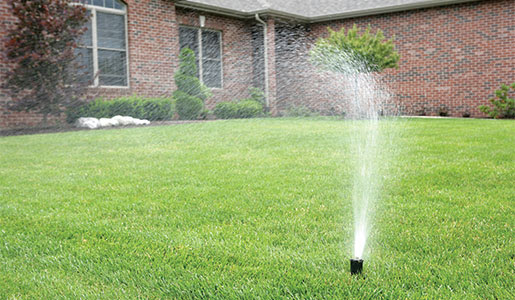
         In order to have a healthy and vibrant lawn remember that water is a critical component. When grass plants lack water they have very little chance of survival. And if the plant does survive, it will no longer be green and full, instead it will dry out and be more prone to infestation, like weeds and/or fungus. A sprinkler system is an excellent way to keep your lawn properly hydrated.  Watering with a sprinkler system is as simple as a flick of a switch. Here at Emil Yedowitz Landscaping we could help you to chose and install the right sprinkler system for you. A sprinkler system can assure that you can add a check mark next to watering on your list of resolutions!

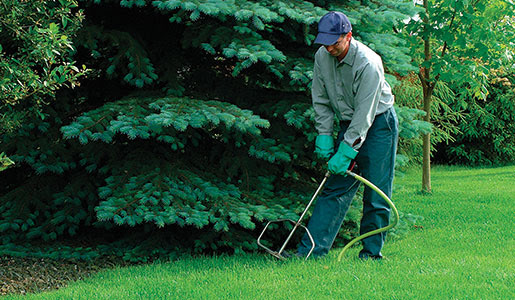
         In addition to plenty of water, aeration is an important step towards a healthy lawn. Compacted soil and excessive thatch can starve turf roots of the air, water and nutrients they need in order to grow deep and strong. Aeration can help with this maintenance problem. With this process, a machine known as a core aerator punches through turf and pulls out plugs of soil and thatch, which are left behind to dissolve during rainfall or sprinkling. As the plugs dissolve, decomposition of thatch layers is promoted. Plus, the holes created during aeration make it easier for air, water and nutrients to reach the roots. This process will provide a healthier lawn as well, and yes….that could be check mark #2 for a new years resolution.

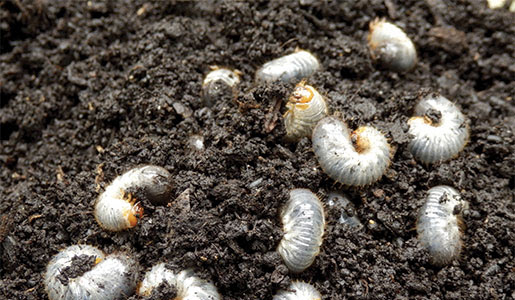
         And lastly, a 5 round lawn care program comprised of  well balanced fertilizers, weed control products and a little insect control. Why, you ask? Just like the human body, plants need nutrients to grow healthy and stay healthy.  If you neglect the nutrient component of growing a healthy lawn, then your lawn will eventually fall victim to weeds and/or fungus a.k.a “Pests”. 

         These lawn care processes are vital for a healthy lawn. As well, now that spring is soon to be approaching, once the weather warms up and the ground begins to soften up, all of these things should be done to your lawn to resurrect it from the winter and prepare it for the summer! By vowing to make these changes this year your lawn will be sure to thank you!