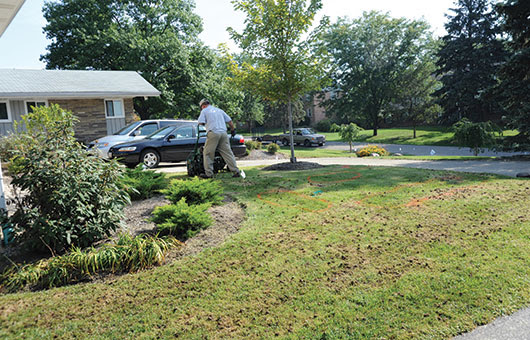
Can Your Lawn Take the Heat?

Summer will be here soon, and it can be brutal on your lawn. But summer hardiness can be improved this year and in the years ahead. Here are some things to think about throughout the rest of the growing season:

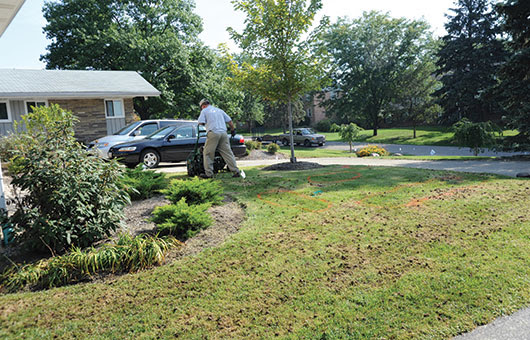
Mowing: As temperatures increase, you should gradually raise your mowing height by 25% to 50%. Also, you should remove no more than 1⁄3 of the grass blade at a time. This will keep the soil shaded and encourage deeper roots. When summer heat starts to subside, you can gradually lower the mowing height again.

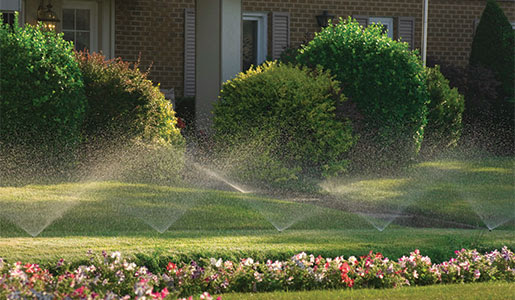
Watering: Water your lawn deeply and infrequently, since light, frequent waterings encourage shallow roots that can’t sustain grass plants. Your lawn needs from 1″ to 1.5″ lawn-hostasof water per week from rainfall or sprinkling, and you should soak the soil to a depth of 6″ each time. Early morning is the best time to water.

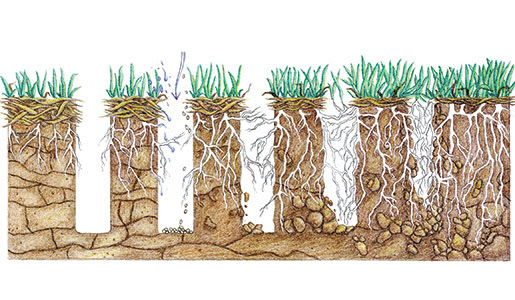
Core Aeration and Fertilization in the Fall: Core aeration opens up the soil, breaks
 up thatch and improves the flow of air, water and nutrients to the roots. By having your lawn fertilized after aeration, your turf will be less susceptible to disease while exhibiting improved recovery from the stresses of summer heat and drought. Fall fertilization will also lead to fewer summer weed problems and better fall-to-spring color.

Mulch- More Than Just “Pretty”

Much more to mulch then what meets the eye

images-11Mulch- most of us think of it as something there to make the ground look good.  And a clean edging job and fresh mulch does just that. The consistent color and texture do improve the looks of your shrubs and flowers. In fact, dark colored mulches even widen the pupil of the eye, making bright plants stand out even more. Mulching also cuts down a lot on the amount of time and effort it will take to keep your beds and your whole property looking better throughout the entire season. Here are some of the advantages of spring mulching.

Some of the things you can count on mulch to do for you:

  • Prevent many weeds and grasses from sprouting by blocking sunlight from the soil
  • Keep up to 21% more moisture in the soil around the root zone
  • Help soil stay up to 10 degrees cooler in summer, which reduces stress on the plants

mulching-794901What is the best mulch to use? There is a huge variety of mulch materials available and you can have “bulk” or bagged mulches. Your choice will probably depend on what’s available and your personal preference for color and texture.

Whatever type of mulch you prefer, it’s best to get an early start for the most benefits. So mulch now for an easier season later on.

Make This the Year Crabgrass Loses!

It doesn’t have to be an uphill battle

Scientists have recorded 50-year-old crabgrass seeds sprouting after being brought to the surface from deep in the soil! They are very tough seeds, and a challenge when it comes to controlling this grassy weed.

A Very Prolific Producer

Just one mature crabgrass plant can produce from 4,000 to tens of thousands of seeds, which are then brought into your lawn by birds, on the shoes of your mailman or other images-75visitors and blown in by the wind. Once these seeds lodge in your soil, they don’t need much to germinate, grow and begin to spread. Because crabgrass is an annual, it grows quickly to a circular plant 12 inches in diameter. It defeats your slower growing turf and leaves large holes or voids when it dies in the fall.

A Two Prong Attack to Win Against Crabgrass

  1. Crabgrass needs bare or nearly bare soil in order to germinate. It has trouble getting a hold in thick and healthy lawns. So the first step is to keep your lawn healthy and thick. That means a good fertilization program: keeping up with pests and being sure the lawn gets enough water and is mowed properly.
  2. Use a combination of both pre- and post- emergent herbicides to directly control crabgrass.

A pre-emergent herbicide is applied in the spring or late fall to set up a barrier in the soil. As weed seeds just begin to germinate, they are eliminated by the pre-emergent.

A post-emergent herbicide can be used to treat any established crabgrass plants in your lawn. This type of herbicide will kill off the crabgrass without harming your established lawn.

Crabgrass and other annual weed seeds will keep coming into your lawn. The best solution is to remember the “two prong” attack- healthy lawn practices and a combination of herbicides- to get any that slip through and make sure you win this year!

Professional Landscape Maintenance Just Makes Good Cents!

Maintaining your landscape can become something like cleaning out the garage- you can do just the minimum to get by and get to the rest of it “later.” But unlike your garage, the images-77landscape keeps changing and growing. Weeds keep sprouting, shrubs keep growing and turf and ground covers continue to creep over sidewalks and drives. Before long, your whole landscape can start looking shaggy and overgrown. And once problems get started they almost never disappear on their own and usually get harder to solve.

Get it on the Schedule!

IMG-20110629-00091Regular, professional clean-up, weeding and pruning will make your property and your life a lot happier. This may include a spring clean-up, edging of beds and application of mulch along with any needed pruning. This can be followed by a mid-season weeding and pruning and then in the fall for a final clean-up. Having a big event this season? Arrange now for the services you may need. Most programs are customized to some extent to meet the different challenges of various landscapes. You can make this the year to get landscape in shape by getting it on the schedule!

The “Must-do’s” of Fall

       It’s about that time where all those beautiful leaves are resting on your lawn. Should you leave them there? No! It is important that leaves are raked up from your lawn in order to keep it healthy. If you do not, it is possible that mold can grow under those leaves, similar to snow mold. This mold will suffocate and damage your turf. Sure signs of mold are white or grey spots growing throughout your lawn. In addition, thick layers of leaves can also prohibit the growth of your lawn by suffocating it and depriving it of the necessary sunlight needed for growth.

       How else should you prepare your lawn for the current and upcoming weather you ask? Try taking some of these tips:

  • Wondering what to do with those leaves after raking them from your lawn? Consider working them into your garden soil or adding them to your compost pile!
  •  If rainfall is scarce, remember that your lawn will benefit from extra watering this fall. 1″ to 1 1⁄2 ” per week will be very helpful.
  • It’s a good idea to add a layer of mulch to your landscape plantings after the first hard freeze. This will help to keep the soil temperature more consistent through winter for extended root growth.

    Lawn Mold

  • Keep that mower handy! Mowing should continue until your grass has stopped growing for the season.
  • If you have a water garden, you can keep leaves out of it this fall by covering it with netting.


Just by following these few steps your lawn will be sure to thank you with another year of green, lush grass!

Is Your Landscape a Little Too “Endeering?”

Here’s how you can fight back against destructive deer 

Increased deer populations, along with the expansion of suburban areas, means more deer are wandering into our neighborhoods. Not only are deer a definite road hazard, but they can do a lot of damage to landscapes too.

Deer tend to shy away from people, but they will browse through your landscape in search of a meal if their natural woodland food sources become scarce or depleted. Plus, they can damage your trees by rubbing their antlers against the bark.

Deterrents to Try

One approach to discouraging deer is to use plants they don’t like in your landscape (paper birch, common boxwood, American holly, daffodil and English lavender are a few examples). The problem with this approach is that deer will feed on just about any plant if they’re hungry enough.

A more effective approach is to add deer repellents to existing plants. Commercial repellents can easily be found at your local garden or home

Damage from antlers

goods store, or you might consider making your own repellent using simple bar soap. Soap bars hung in trees at about 6’ height have been proven effective, and they last longer if you leave them wrapped. Simply hang them with wire about 3’ to 4’ apart. It doesn’t matter what kind of soap you use, since deer just don’t like the smell.

Barriers can also be constructed to prevent contact with plants. Deer netting can be wrapped around smaller plantings, or it can be combined with wooden stakes to form a fence around larger specimens. If deer activity is especially heavy on your property, you might even consider having a deer-proof fence installed. These are generally made using woven wire and should be at least 8’ tall to prevent deer from jumping over them.


As beautiful as deer may be, having them hang around your landscape just isn’t good. Taking steps to keep them away will be worth the effort! But remember, it is their home too, do not take violent steps to get rid of deer!

“Is Dinner Ready Yet?”

You Can’t Blame your Lawn, Trees and Shrubs for Asking!

It’s hard to overstate how important it is to fertilize your lawn, trees and shrubs, especially during the fall. Most of the plants in your landscape will soon be shifting into dormancy, with top growth slowing down or stopping altogether. Underground, however, they’ll still be very active.

In order to prepare for new growth in the spring, your lawn, trees and shrubs must build new roots and fatten them up with nutrients. You can improve this process by making sure they get a heavy dose of fertilizer in the fall. The stronger and healthier the roots become as a result of proper fall fertilization, the better growth you can expect next year.

Some of the benefits you can expect from fall lawn fertilization include:

  • Grass blades that stay greener and roots that grow later into the season.
  • Better recovery from the stresses of summer heat and drought.
  • Increased ability to hold water, which helps grass plants withstand the drying and browning effects of winter winds.
  • Improves resistance to some cool-weather fungus diseases due to better overall plant health.
  • Thicker green-up in the spring.

By having your trees and shrubs fertilized this fall, you can expect:

  • Improved flowering.
  • Stronger resistance to insects and disease.
  • Better winter color in evergreens.
  • Healthier, denser foliage.
  • An increase in root mass and root branching.

Remember, fall fertilization of your lawn, trees and shrubs will have a direct effect on the performance of your plants throughout next year’s growing season. It’s an essential part of protecting and improving your valuable landscape investment.

Fall is the time to Fertilize!

In Fact, This is the Best Time of Year for It

Since top growth slows down (or stops altogether) in the fall, your lawn, trees and shrubs no longer have to continue the constant flow of nutrients and water to their leaves and blades. Instead, they’re using this time to build up a storehouse of nutrients in preparation for new growth in the spring.

The storage process occurs in the plants’ root systems. A heavy fall feeding makes more nutrients available and helps to trigger the process. The fatter and more extensive roots become from fall fertilization, the better growth you’ll see next year. This is especially true for fall-seeded lawns and newly planted trees and shrubs.

Of course, improved growth isn’t the only benefit you can expect from fall feeding. With an extra dose of nutrients this fall, you can expect:

  • Stronger resistance to insects and diseases.
  • Enhanced winter color in turf and evergreens.
  • Better water-holding ability, which can decrease the drying, browning effects of cold winter winds.
  • Increased blooming in your flowering trees and shrubs.

Heavy fall fertilization is a vital part of any good lawn, tree and shrub care program. By meeting the nutritional needs of your plants this fall, you’ll be rewarded with a healthier, more beautiful landscape that you’ll love coming home to. Stay tune for more tips on how to take care of your lawn this fall!

How to Help Your Lawn Survive the Summer

SUMMER HEAT, DROUGHT AND DISEASE CAN BE DAMAGING

Many lawns are going through a stressful period right now. High temperatures are tough on turf. Combine the heat with long stretches of little or no rainfall, and lawns will start showing signs of heat and drought stress in no time.

If your grass is bluish-green in color, or if our footprints remain in the turf after you’ve walked on it, these are sure signs that your lawn can us some help. In severe case, turf can go into a dormant state causing the entire lawn to turn brown.

WATER PROPERLY TO AVOID STRESS

The best way to prevent heat and drought stress is to give your lawn plenty of water. As a general rule, your turf needs from 1” to 1 ½ “ of water per week from rainfall or sprinkling.

When sprinkling, it’s important to let water soak in to a depth of 6” so that enough moisture reaches the roots. Less frequent, deeper watering is more beneficial than frequent, shallow sprinklings. Also, it’s best to water during the cooler parts of the day when less water will evaporate in the sun’s heat.

WHAT IF YOUR LAWN STILL LOOKS STRESSED?

If you are watering properly and your lawn still looks unhealthy, a summer turf disease may be to blame. Symptoms of turf disease usually involve spots on grass blades that vary in size and color.

Unlike heat and drought stress, which can affect the whole lawn at once, diseases affect only small portions of turf at first. They then work themselves outwards as they spread, creating areas with major damage bordered by areas with minor damage. It’s important to tend to lawn diseases as soon as possible after they’re discovered in order to keep them in check and prevent further damage from occurring.

Summer can be intense, but your lawn doesn’t have to suffer. Proper watering and disease control (if necessary) can make the season much more tolerable for your tired turf!

Grass Clippings Are Too Valuable to Toss Out

It can be tempting to bag and dispose of grass clippings, especially if it’s been a long time since your lawn was last mowed. After all, clumps of cut grass sitting on your lawn are unattractive, and they can smother the grass underneath if they aren’t removed.

Mowing more often, on the other hand, creates a free source of nutrients that can and should be left behind to decompose in your lawn. The trick is to follow the “1/3 Rule,” mowing often enough so that no more than 1/3 of the grass blade is removed with each cutting. It’s also important to mow only when the grass is dry, and to use a sharp mower blade.

The clippings left behind will fall down between the blades left standing, returning valuable nutrients to the soil as they decompose. This practice is known as “grasscycling,” and it can provide your lawn with up to 15% of the nutrients it needs for healthy growth.

Not only is grasscycling a great way to improve your lawn’s fertility, but it helps to reduce the amount of yard waste sent to landfills as well.  Grasscycling is becoming much more common, and that’s a good thing considering that one lawn can generate roughly 300 pounds of clippings per 1,000 square feet each year. Imagine what would happen to our landfills if nobody bothered to grasscycle!

Grasscycling also cuts down on the time it takes to mow, since bagging and disposal of clippings are eliminated. In the long run, this beneficial practice leads to a healthier, greener lawn that requires less fertilizer and effort to maintain.